
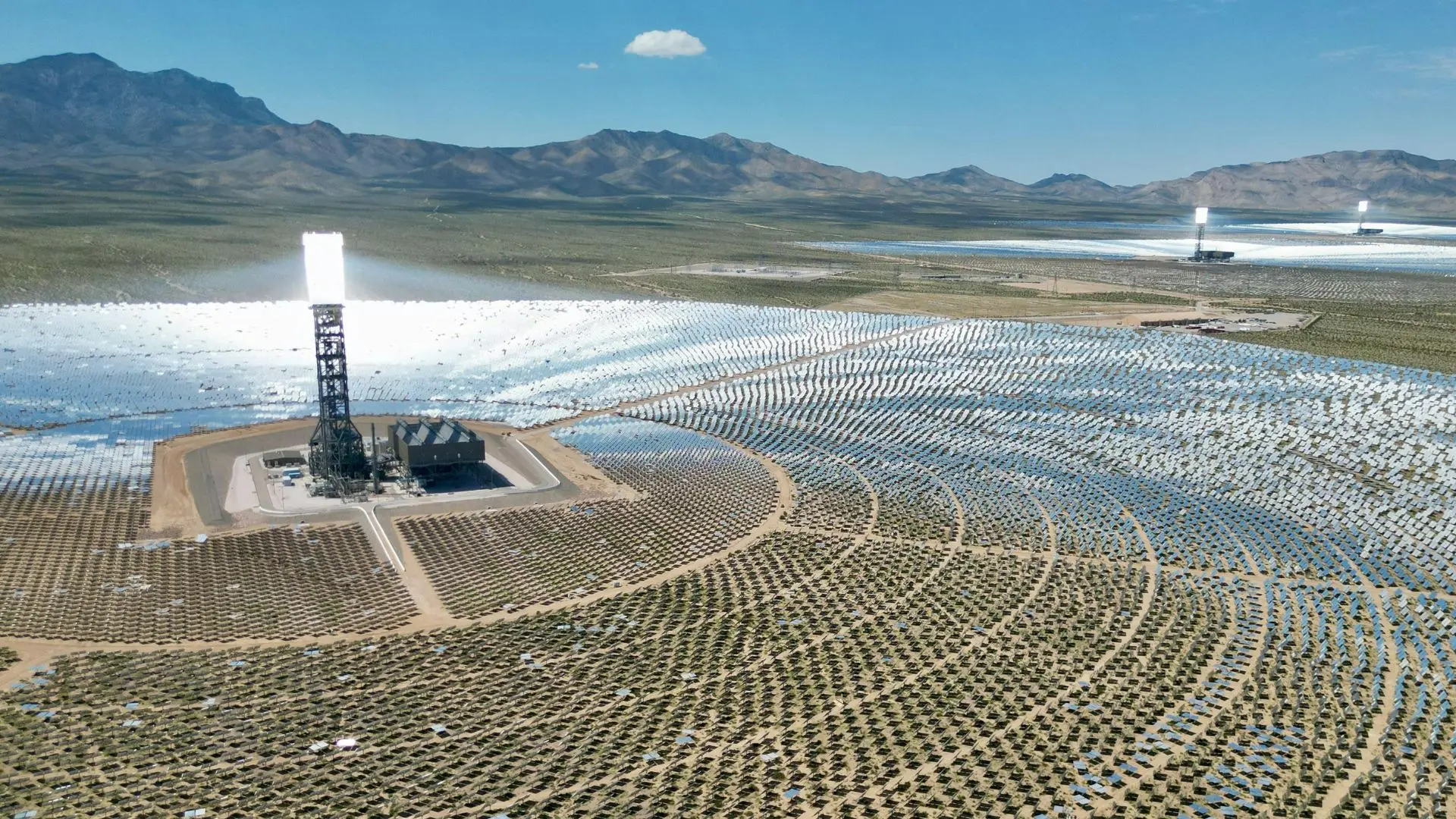
California — After a decade of operation, the Ivanpah Solar Electric Generating System, once hailed as America’s largest solar thermal project, is shutting down. Located in the Mojave Desert, the project was designed to generate clean energy by using mirrors to concentrate sunlight onto central towers.
The closure highlights critical lessons for global energy synergy. Despite its ambitious scale, Ivanpah faced persistent challenges: high maintenance costs, lower‑than‑expected efficiency, and competition from rapidly advancing photovoltaic (PV) technology. PV solar panels, cheaper and more adaptable, have outpaced solar thermal systems in both deployment and scalability.
For regions like ASEAN, the shutdown is a reminder that innovation alone is not enough. Sustainable energy projects must balance technological ambition with economic viability and long‑term adaptability. The synergy between governments, private investors, and communities is essential to ensure renewable projects remain resilient against market shifts.
Globally, the Ivanpah case underscores the importance of diversified energy strategies. Solar thermal may still have niche applications, but the momentum lies with PV, wind, and hybrid systems. Policymakers and energy leaders must recognize that synergy in renewable energy is not about one technology dominating, but about integrating multiple solutions to meet diverse needs.
Ultimately, the Mojave project’s closure is not a failure of vision, but a recalibration of priorities. For Sinergi Global Media, the key takeaway is clear: global energy synergy requires constant adaptation, pragmatic leadership, and a willingness to pivot when technologies evolve faster than expected.